Forgotten Authors: Austin Hall

Forgotten Authors: Austin Hall

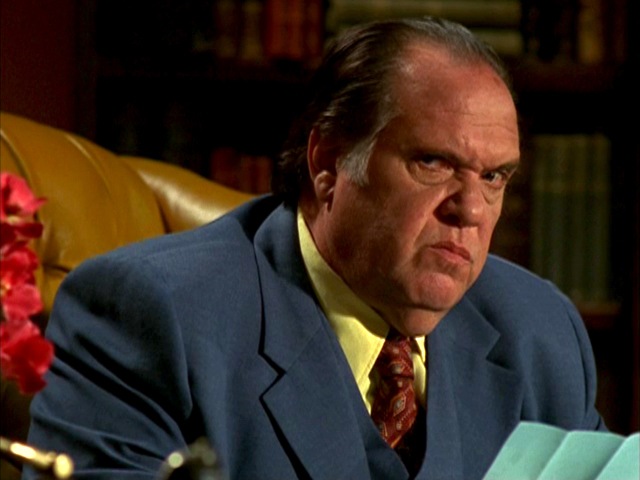
Austin Hall

Austin Hall was born on July 27, 1880.

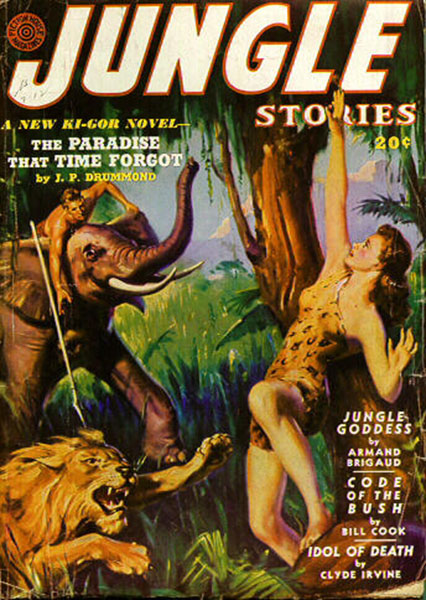
While working as a cowboy, Hall was asked to write a story. This led to his career as an author, writing westerns, science fiction and fantasy stories, with westerns forming the majority of his published work. A one time, Hall may have worked as a sports editor for a newspaper in San Francisco.

Following the death of Hall’s father, his mother remarried and the family appears to have moved to Ohio, in an interview published by Forrest J Ackerman in 1933, Hall claims to have attended college in Ohio and California, but no details of his academic life can be confirmed. By the time he was thirty, Hall (as well as his mother and step-father) were living back in California and Hall had married Clara Mae Stowe and they had two children, Javen and Bessie.

Read More Read More

La Belle Dame sans Merci: Tam Lin by Pamela Dean

La Belle Dame sans Merci: Tam Lin by Pamela Dean


Tam Lin (Tor Books paperback reprint edition, April 1982). Cover by Thomas Canty

There’s been a lot of genre fiction set at schools. Hogwarts is an obvious example, but such settings were around long before Harry Potter; Heinlein’s Space Cadet, The Uncanny X-Men, and Le Guin’s A Wizard of Earthsea were all there first. Tam Lin is another early example, published six years before Harry Potter and the Philosopher’s Stone made scholastic fantasy a best-selling subgenre.

But it has an important difference: Its setting, the fictional Blackstock College, doesn’t teach magic, or superheroic combat, or spaceflight, or anything else fantastic. It’s a fairly typical small liberal arts college (based on the real college where Pamela Dean did her undergraduate work) where the supernatural elements are hidden beneath the surface.

Read More Read More

The Mighty Sword & Sorcery Anthologies of Hans Stefan Santesson

The Mighty Sword & Sorcery Anthologies of Hans Stefan Santesson


The Mighty Barbarians: Great Sword and Sorcery Heroes, edited by
Hans Stefan Santesson (Lancer Books, 1969). Cover by Jim Steranko

Hans Stefan Santesson (1914 – 1975) was born in France and lived in Sweden with his parents until 1923 when his mother immigrated to the US. She was a commercial artist and he soon became an editor for various mystery publications.

I likely would never have heard of him if not for two books of Sword & Sorcery he edited for Lancer Books. These were The Mighty Barbarians (1969) and The Mighty Swordsmen (1970), both with evocative covers by Jim Steranko.

Read More Read More

Let’s Go to the Movies: 1996

Let’s Go to the Movies: 1996

1996 was 30 years ago. And it was quite the year for movies. Big-screen extravaganzas dominated the box office, and some movies outside the Top 10 still more than resonate today.

On July 3, Independence Day dropped. Man, that was a huge hit. EVERYBODY I knew saw, or was talking, about it. And smooth crooner Harry Connick Jr. became a lot more popular. With a US gross of $306,156,000 ($644,338,000 in today’s dollars) on a budget of $75 million, it was a smash hit.

Big-screen action continued the trend of domination, with Twister ($241,721,000) second, and The Rock ($134,069,000) fourth.

And at number three saw the birth of a mega-franchise that seven hit follow-ups and which only wrapped up last year: Mission Impossible. That first movie was an homage to the original series, and I really liked it. Then John Woo turned it into special effects cotton candy and I never watched another installment.

Read More Read More

Horror and Gothic, Magic and Witchcraft: The Dark of the Soul, edited by Don Ward

Horror and Gothic, Magic and Witchcraft: The Dark of the Soul, edited by Don Ward


The Dark of the Soul (Tower Books, 1970)

Here’s another anthology I picked up because it had a Robert E. Howard story in it.

The Dark of the Soul, edited by Don Ward, A Tower book, 1970. Cover artist unknown. It contains a short story by Robert E. Howard called “The Horror from the Mound.” It’s a good story, although not one of Howard’s best.

This collection is more horror and gothic, magic and witchcraft, and not Sword & Sorcery (S&S). The stories are atmospheric but maybe slow for modern audiences. Here are my thoughts.

Read More Read More

What’s For Dinner? The Library at Hellebore by Cassandra Khaw

What’s For Dinner? The Library at Hellebore by Cassandra Khaw

Art by Vladimir Logos

I’ve lost count of novels that involve some sort of magical college featuring adolescent misfits plucked from humdrum daily existence thrust into contests between good and evil, not to mention raging hormones.

Blame Harry Potter, though Rowling was building on the trope, not inventing it (c.f., in particular, A Wizard of Earthsea). She just got wildly successful with it. So why shouldn’t others also build on that success?

Granted there is nothing new under the sun; no one is irked that Maggie O’Farrell did yet another riff on a Shakespeare play with Hamnet. Even so, not to knock the whole dark academia thing, I can understand how some might sneer at yet another mystical schoolyard fantasy.

Read More Read More

Forgotten Authors: Neil R. Jones

Forgotten Authors: Neil R. Jones

Neil R. Jones

Neil R. Jones was born on May 29, 1909 in Fulton, New York, the youngest for four children. He has stated that the first science fiction novel he read, in 1918. Was Will N. Harben’s The Land of the Changing Sun, a lost world novel, which led him to the writings of Edgar Rice Burroughs.

His first published story, “Vengeance of the Ages” was published in his high school yearbook in 1926, with a second story, “The Meteor of Fate” appearing the following year.

“The Death Head Meteor,” was his first professional publication, published in the January 1930 issue of Air Wonder Stories and is believed to contain the first appearance of the word “astronaut.” He had previously sold the story “The Electrical Man,” but it didn’t appear until May of that year in Scientific Detective Monthly, earning him his first cover.

Read More Read More

Dark Muse News: Reviewing Arcane Arts and Cold Steel by David C. Smith

Dark Muse News: Reviewing Arcane Arts and Cold Steel by David C. Smith


Arcane Arts and Cold Steel (Pulp Hero Press, December 24, 2025)

From History to Writing Sword and Sorcery, Pulp Hero Press has us covered

In 2019, Pulp Hero Press published Brian Murphy’s Flame and Crimson: A History of Sword-and-Sorcerywhich was notably covered by David C. Smith (link to review) and John O’Neill (link) on Black Gate. O’Neill highlighted that Brian Murphy was one of the earliest contributors to Black Gate, from way back in 2012! Six years have passed since the publication of Flame and Crimson; whereas the subtitle and focus of that was a history of Sword & Sorcery (S&S), Pulp Hero Press just followed with a sequel focused on writing it, penned by David C. Smith with a foreword by John O’Neill.

This post covers the complementary book Arcane Arts and Cold Steel: Writing Sword-and-Sorcery Fiction (Pulp Hero Press 2025, 298 pages).  Greg Mele recently posted a Black Gate article on how this book is The Literary Sorcerer’s Toolkit; read that to learn more about the author.

Read More Read More

Swords & Sorcery and The Fantastic Swordsmen, edited by L. Sprague de Camp

Swords & Sorcery and The Fantastic Swordsmen, edited by L. Sprague de Camp


Swords and Sorcery: Stories of Heroic Fantasy, edited by L. Sprague de Camp
(Pyramid Books, December 1963). Cover by Virgil Finlay

Here are two more Sword & Sorcery anthologies edited by L. Sprague de Camp. Both are from Pyramid Books. Swords & Sorcery is 1963, with interior illustrations by Virgil Finlay. ISFDB indicates the cover is by Finlay as well, although it looks to me very much in the cover style of the second book, The Fantastic Swordsmen (1967), where the cover is attributed to Jack Gaughan. Some of the experts who visit this page probably know the truth.

1. Swords & Sorcery is a nice collection. It contains “Shadows in the Moonlight” (Conan) by Robert E. Howard, and stories by Poul Anderson (the excellent “Valor of Cappen Varra”), Fritz Leiber (Fafhrd, Gray Mouser), Kuttner (Prince Raynor), Lord Dunsany, C. L. Moore (Jirel), Clark Ashton Smith, and Lovecraft (“The Doom that Came to Sarnath”). The introduction on “Heroic Fantasy” by de Camp tends to piss some people off that I know, although I’m not one of those particularly. It suggests that S&S is purely escapist reading. I think it does make for a good escape from life’s mundanities but there’s more to it than just that.

Read More Read More